turca etiketine sahip kayıtlar gösteriliyor. Tüm kayıtları göster

9 Ocak 2015 Cuma

Denizli/ Laodikeia, PAMUKKALE, Hieropolis

Although probably most of you preferred to read this post because of Pamukkale, I decided to start with Laodikea as it was the main city and both Pamukkale (the coton white stone balcoons) and the town of Hieropolis were its summer holiday places.
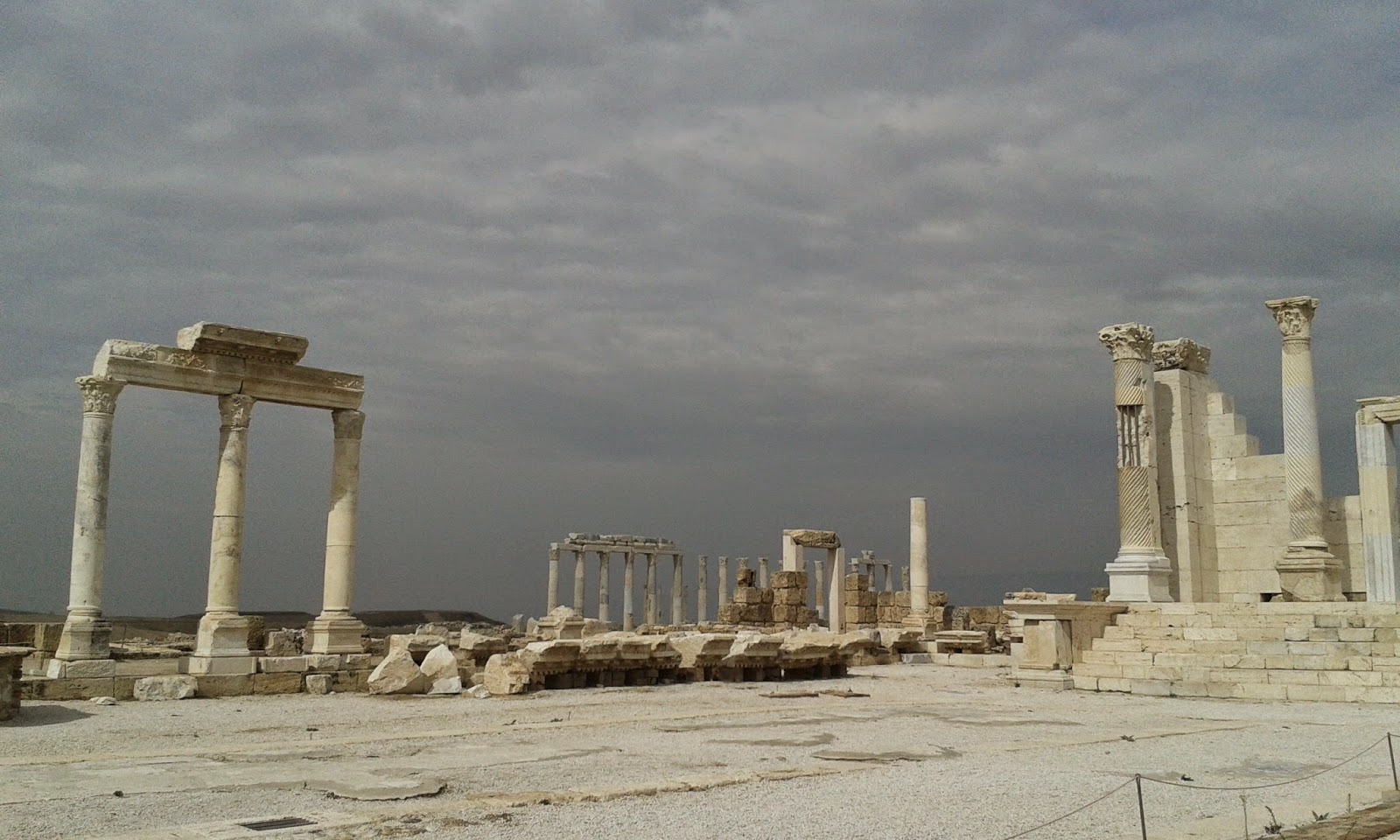
the ruins of the temples region of Laodikeia
Laodikeia was one of the most important and famous cities of Anatolia at 1st century BC. It was an important textile center famous with its sheep's wool which meant fashion for rich women and men at that century. The city was distroyed by a big earthquake at 60 AC. This was not the first one which hit Laodikeia but as the history says, the last one. One of the seven churchs of revelation, St. Paul's Church is also at Laodikeia which shows how important was cristianity at this ancient city during Roman times. Unfortunately the excavation of the church was still on so that I couldn't see it and I had to postpone visiting it to another time.

The first excavation of the ancient city Laodikeia was started at 1960's by a canadian professor, Jean des Gagniers and that time on, the excavations are still proceeding by turkish archeologists. It's told to me that it will take like 500 years to finish the excavation totaly and the archeologists think that Laodikea is even bigger than Ephesus. But the part of the city that has now come to light is enough to show the wealth and size of this ancient city to the visitors.
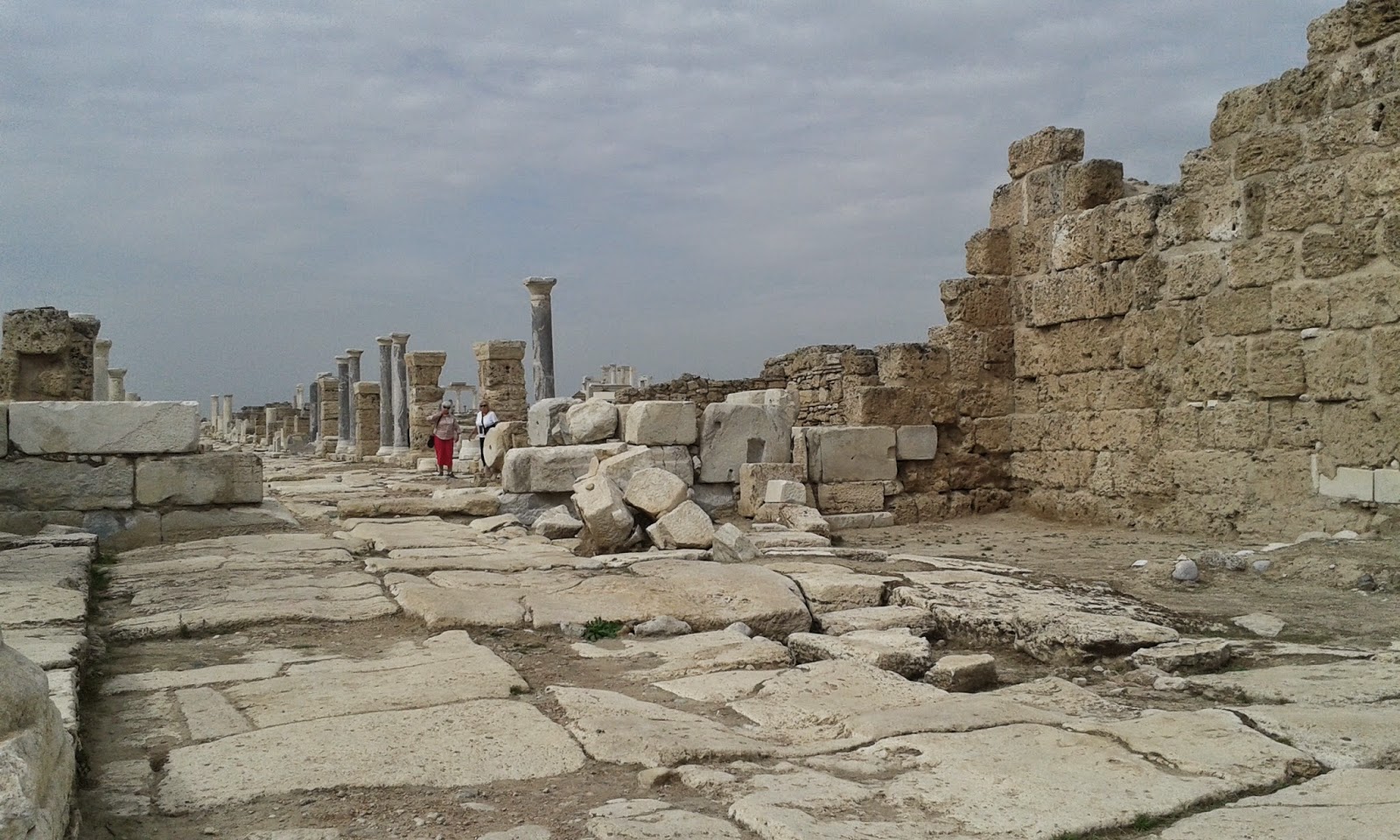
main street of Laodikeia
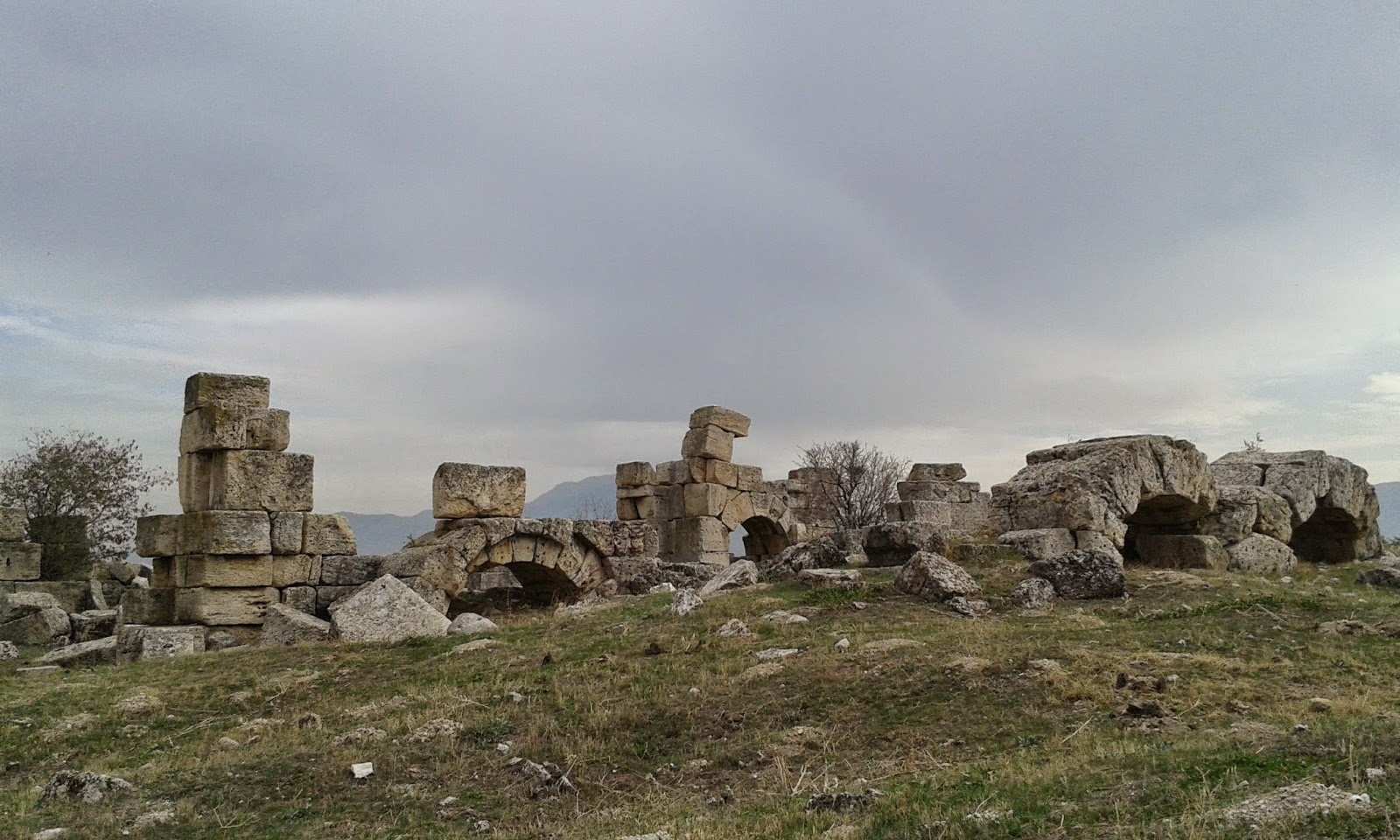
ruins of the public bath
the excavation area and the western gate of the city

 I should admit that before visiting Laodikeia, I wasn't expecting to see a magnificence of an ancient city which can easily compete with the attraction of Ephesus. This place will be my life long visiting area as I'll be able to find out new things, buildings, places, temples... etc at each of them.

The main thoroughfare of  Hieorpolis
Hieropolis is the ancient city which is also the entrance to the healing waters of Pamukkale's cotton like balconies. It is also the summer holiday place especially for the wealty people of Laodikeia. Its large necropolis contains more than 1200 graves and tombs which are the most fastinating examples of that century. It has a large amphitheather with a capacity of 15,000 people which remains standing, the temple of Apollon and hot spring pools. The museum contains large varioty of examples of decoration, money, sculptures and information about the city.

temple of Apollon
hot spring pools
king tombs
necropolis of Hieropolis
examples of column decoration
amphitheater
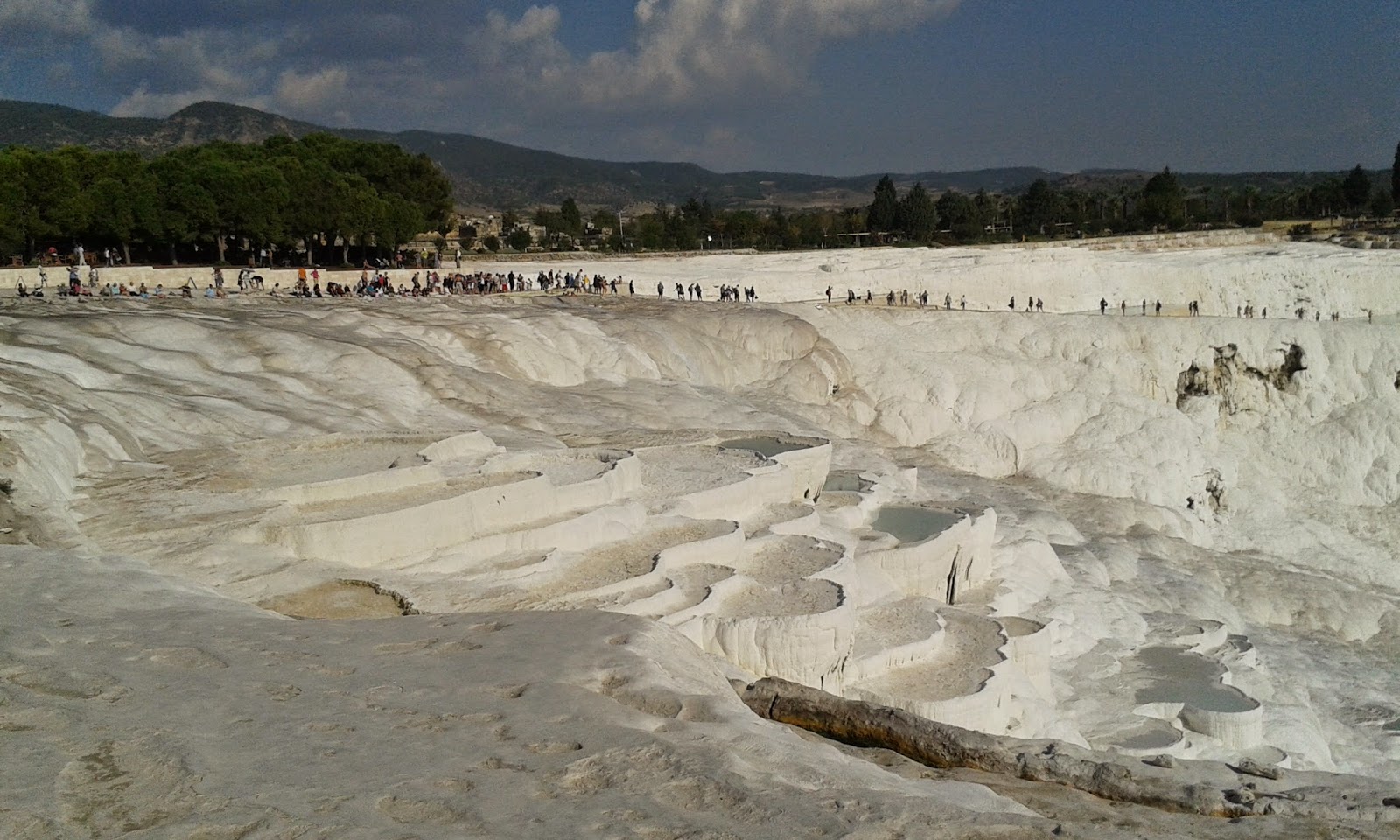
And the magnificent Pamukkale... The cotton balconies of healing spring water is now a World Heritage Site.
Pamukkale terraces
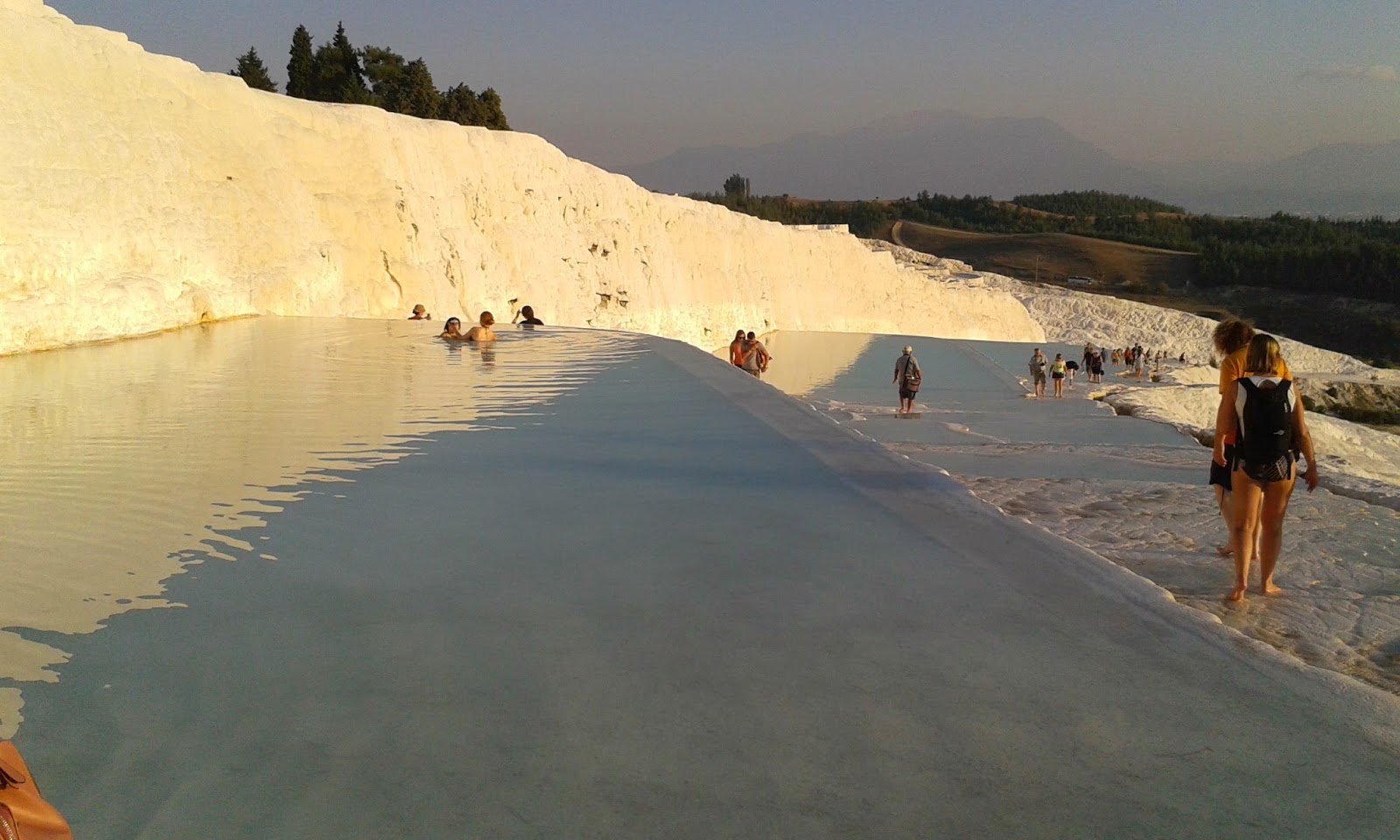
 Nowadays the valume of hot spring water is managed by the engineers because it causes some slipping accidents for the tourists who want to walk on them. This also causes some damage to the terraces. They start to get dry and turning black and you can see less water than you expect. But still, you can enjoy sitting in warm water and walking from terrace to terrace. It's not allowed to walk with shoes though. You have to be bare feet to enjoy this visit.
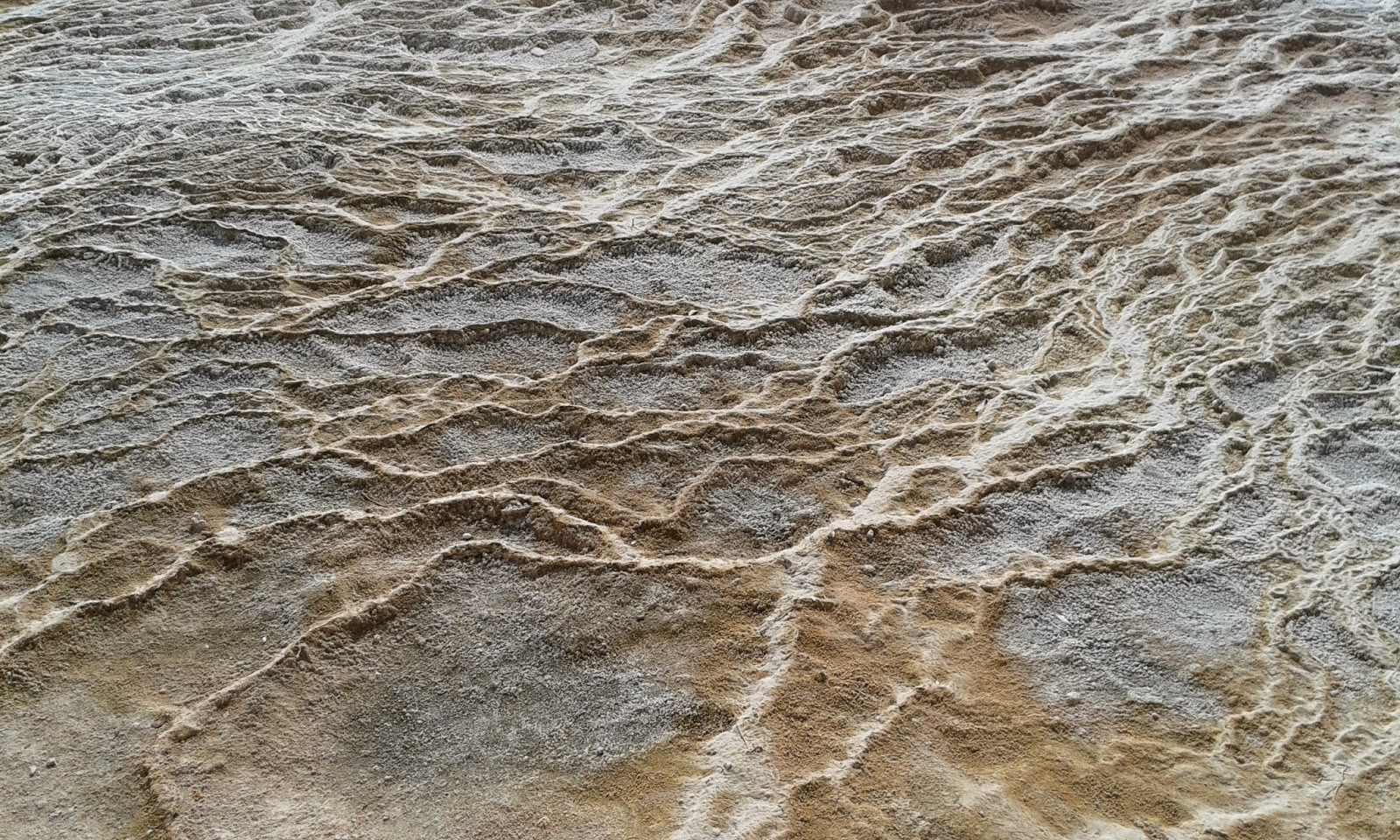
The reason of this cotton white terraceses is the minerals of carbonate remains of the hot spring water. Inspite of the soft look, the ground is pretty hard and easy to walk on.
You can reach to Pamukkale with a 20 minutes ride by minibus from Denizli.

the part started to turn black due to lack of water
hot spring water terrace
a general look to Pamukkale
hot spring water contains carbonat minerals
hundreds of tourist visits Pamukkale everyday
visitors enjoying the hot spring water


6 Ekim 2014 Pazartesi

Selcuk in a week... Ephesus, Artemis, Basilica of St. John, Pamucak Beach, Şirince Village...

Selçuk is a small and cutty town just 3km to Ephesus. It is also the accommodation and transfer point for the ones who would like to visit Ephesus, Artemision, St. John Church, house of Virgin Mary or Isa Bey Mosque.  It is a green and friendly town with lovely local small restaurants who serve delicious traditional dishes to cheap prices. People are friendly and wellcoming with big smiles on their faces. It is not only the town itself but probably because of containing that much important religious places, some spiritual things are going on over there or I'm dreaming.

First day, I reached to Selçuk early in the morning. The hostel I was planning to stay had no vacancy but offered another one with cheaper price. That was a good deal for me. 30TL a day with breakfast. Staying in a three bed room by myself. Locals told me that after september number of tourists start decreasing and see the bottom at january and february. So, this was my luck:) 
I couldn't wait more to see Ephesus as it was my first reason to visit here. I took a minibus directly to Ephesus from the town terminal. There are minibuses to Ephesus and from Ephesus to Selçuk in every 20 minutes and costs only 2,5TL(one way). 

Ephesus... At last, I was able to visit this important ancient Greek city of Ionia. My happiness and excitement was undescribable. The city wellcome me with its big ancient open air theater. Its capasity was 25.000 people and had been used not only for plays or concerts but also for the gladiatorial combats during later Roman times.

After sitting on the steps of this fascinating theather for a while I continued walking at the wide streets of the city. The Marble Street which led me to Celsus Library had a gift for me. A chamaleon was passing across the stree with slow steps spining its eyes 360degress and looking to people. I didn't even know we have them in Turkiye. After this lovely surprise, I followed the streeet through the Celsus Library.  This library is one of the most beautiful structures in Ephesus. I don't know how many times I've seen its pictures for all my life. Now, it was standing in front of me. So beautiful!

I was unable to leave the sight of the library. I made myself move just after deciding to come back later again at the end. So I followed the Curetes Street to see the temples of Domitian and Hadrian, fountains of Trajan and Pollio, gymnasiums, the odeon... Passing from Hadrian's gate, saluting to Memmius Monument, walking withing the rooms of ancient Scholastica baths, coming back to the Harbour Street after the last "long" look to the library. I know words are not enough to describe this ancient city. So I'll share some photos to give you an idea about it.

antique open-air teather
the chamaleon I was talking about
The Celsus Library
Curates Street
temple of Hadrian
Memmius Monument
the odeon
the basilica
Second day, after having my breakfast at the hostel, I went out firstly to visit the Temple of Artemis. Ephesus is a very important religious area. Its religious days start from paganism times. Temple of Artemis is one of the biggest temples of paganism that was built in Anatolia and is one of the World's Seven Wonders. Of course there is not much left from it but to be at a place, built long before cristianity or islam was an original experience. To think that once upon a time people were worshiping to nature, respecting and loving it made me think of nowadays and how easy to destroy it for human kind. Still I felt hope. If we had done this before probably we can do it again. Maybe I'm dreaming again... Anyway, starting the day with this temple was not a spontaneous choice. It was my first stop as it was the first to be.

ruins of Artemis Temple
Second stop was Isa Bey Mosque. This time it was not because Islam came to this land as the next religion after paganism but just because it was on my way to basilica of Saint John. Isa Bey Mosque is one of the most delicate examples of Seljukian architecture, situated below the basilica of St. John. The construction of the mosque dates back to 1375 AC.

from outside
inside
Third stop; basilica of Saint John... For the ones who don't know the story, it is generally accepted that St. John came to Ephesus together with the Virgin Mary somewhere between 37 and 48 AC. where they spent the rest of their lives. After his death approximately at the age of 100, he was buried to Ayasuluk Hill according to his last request. Three hundred years after the death of St. John, a small chapel was constructed over the grave in the 4th century. This basilica is the remains of the one which was built by the Roman Emperar Justinian and his wife Theodora. It was constructed in the 5th century AC, After 14th century, due to several earthquakes the basilica became unusable. The monumental tomb of St. John is still here and every year hosts the visits of thousands of cristians.

monumental tomb of St. John
the basilica
Last stop was the inner castle. the citadel... The citadel which is on the highest point of Ayasuluk Hill is like a crown over Selçuk. Behind its proud look its long past is hidden. The walls seen today belong to Seljukid-Ottoman periods. According to the tradition, St. John wrote his Gospel on this hill and prayed there.

the citadel
Third day was a chill out day. After two days of full history, religion and spirituality my soul needed a break and felt like sea air. The address was simple; Pamucak. It's the Aegean coast of Selçuk. A long beach with cool Aegean water. The decrease at tourist number was again a luck for me. It was so pieceful and silent. A little bit windy but worth to watch the sunset. 

Pamucak beach
sunset at Pamucak
Pamucak is only 8km to Selçuk town center. It is the last stop of the minibuses going to Ephesus. There are bungalows and camping facilities for the ones who would like to enjoy a sky full of stars at night but also there are lots of hotel accommodation posibilities.

Fourth day was the time to visit Şirince Village. This old rum village has a long history starting from 5th century. Before the Republic of Turkiye, it is said that Şirince was formed over 3000 houses which means over 10.000 people. Today only around 150 houses are still living. The main living of the village is tourism and raising olives, peaces and fig. The village is also famous with its homemade fruit wines.

Şirince Village
Dimitros Church and village street
Şirince Village
the cranberry wine was delicious
I fell in love with this small and cozy village. And by coincedence, a couchsurfing host found me and offered me a place to stay for a few days. This was an offer I couldn't resist and excepted immediately. At the fourth night of my journey to Selçuk, I stayed at Şirince, woke up the next day, went to Selçuk in the morning, pick up my backpack and came back to Şirince. But they didn't let me go to Selçuk without having a breakfast first. What a lovely one it was...!

traditional turkish breakfast
Fifth day started with this packing stuff and moving to Şirince, went on with a short siesta and lasted with a nice tracking to Kaiser Rock. It is a 3,3km route and is the shortest route around the village. There are some other and longer routes around the village containing stream crossing or church and monastery ruins.

Kaiser Rock near Şirince village
I spent three nights and four days at Şirince village which I enjoyed every second. But as every good thing, we came to the end. I said goodbye to Şirince and left till our next meeting.

Selçuk, Ephesus and Şirince are generally the places where people spend mostly one or two days. But definetely there are many things to do, places to visit in and around Selçuk. You should give it a chance and I guess, it won't let you down.


29 Eylül 2014 Pazartesi

Answers to 6 questions about Turkiye...


5w1h of Turkiye...


WHAT IS TURKIYE?

Turkiye is the original name of Turkey. As a Turkish person, I prefer this version rather than the English one. Nearly 80 million people live here and as you may guess, most of them live in the big cities. 60% of the population is young; thus, we can actually call Turkiye a young country. Despite its young population, the history of the land is very old. From the beginning of human history, the land of Turkiye, also called Anatolia, has hosted many civilizations. Hittites, who signed the first pact after the war with The Egyptian Pharaoh Ramses II, the Lydians, who have one of the world's most ancient walking trails, called "The Lydian Road" with a distance of 509km, and the people of the ancient Greek city states, where the great philosophers of Greece like Socrates and Platon gave lectures, the Byzantines and Ottomans are the examples. It is also the intersection of the three major religions. The first seven churches of Revelation represent an important visiting route for the Christians.

This land of Turkiye is a mountainous peninsula surrounded by the Black Sea at the north, Aegean Sea at the west and Mediterranean Sea at the south. Its coordinates are 26-45degrees N and 36-42degrees E. It is contagious with Bulgaria at the northwest, Greece at the west, Georgia, Armenia, Azerbaijan at northeast, Iran at east, Syria and Iraq at southeast. It is located both in the Asian and European region. There is no difference in bureaucracy between these two lands and their citizens.
from web
Regardless of the nowadays politics, Turkiye is a secular country; the citizens being mostly Muslim, there are also people from the other religions. Family and family members are important and cared. Number of Turkish titles belonging to family members may show you how important this concept is. Anne, baba, kardeş, teyze, amca, hala, dayı, yenge, enişte, baldız, bacanak, kayınvalide, kayınpeder, anneanne, babaanne, dünür, görümce, kuzen, yeğen, dede, nine. :) ... some of these words may be translated to mother, father, sister, brother, aunt, uncle, cousin, nephew, grandmother and grandfather. 21 to 9! There is no English name for the rest.

wHOM TO VISIT?
Ok. There are various types of holidays and travelling options in Turkiye. Actually...for everybody. You can have a family with kids, partners, friends, couples or you may visit alone. Bikers, motorcyclists, backpackers, divers, climbers, honeymoon lovers... Just decide what kind of a visit it will be, and who you are coming with.

wHEN TO GO?
Due to its geographical and logistical conditions, Turkey enjoys a variety of climates, earning the country the nickname 'the land of four seasons'. Throughout the year, every month or season you can find a spot that is worth seeing and has a suitable climate. Summer time (June, July, and August) is generally hot with the temperature exceeding 30°C. Temperatures differ due to geographical locations and the east is the winner with over -20°C. Inner parts of the country also have cold winters with many days of minus degrees and snow. Climate of Mediterranean coast is more tropical than any other parts. The rest of the country enjoys a climate between these two.

wHERE TO GO?
from web
For the ones who are interested in history, limit is the sky:) I mean, everywhere on this land is full of history. You have to either draw lots or just follow the famous touristic destinations for history lovers.

Turkiye is a mountainous country as I have mentioned before. It has two big mountain chains. One is at the north; the other is at the south. Both mountain chains start from the back of the coast lines and form a line parallel to the seas. This formation makes them look like a wall while looking from the sea and are generally covered with old forests. They are preferable for tracking and camping. If you are both interested in nature and history, my suggestions will be Mountain Ida at the west and the Mountain Ararat at the east. By the way Mountain Ararat is the highest point of Turkiye (5.137m). It is a dead volcano, famous with the rumor on the Noah's Ark. There are also many other mountains beside these two mountain chains waiting for the climbers.

Aegean and Mediterranean seas offer their crystal blue water and their underwater treasures to their coasts. Water temperature is 23-24 degrees for the Aegean Sea, and 28-29 degrees for the Mediterranean Sea during the hottest months. If you love swimming, sailing, diving +history, you won't regret coming :)

I haven’t even mentioned Istanbul, Capadocia, Ephesus, Trabzon, Iskenderun, Van, Olympus and etc. yet.

wHY TO GO?
Well, it is up to you. As a citizen of this country, I want to explore and learn more about it. I’ve been travelling to the places I've mentioned above, discovering and interiorizing of myself and pursuing to find a place to build up my owned "water mill". Besides, it is the land I was delivered to. The motherland of me.. Through my life I've listened and learned mostly about this land and its people. Now I'm not sure how much of them are true. Travelling through Turkiye makes me find my own truth. Everybody has a different reason for travelling. What is yours?

hOW TO GO?
Turkiye is at the trans-section of the motorways connecting Europe and Asia. Busing may be an option from European countries mainly like Greece and Bulgaria. Although they are slow and not very new, train travel is also a possibility from the west to the east.
When it comes to flights, you can reach here from all around the world as Istanbul is a connecting stop for lots of long-way flights. Besides, there are cheap charter flight companies, through which you can find a good deal.
Now all of us know that Turkiye is surrounded by three seas. So I guess I don't need to mention the cruise lines coming to Istanbul, Izmir, Bodrum or Marmaris for the ones who would like to come by the sea.

Answers to 6 questions about Turkiye... Hope it will help you. Bye for now!